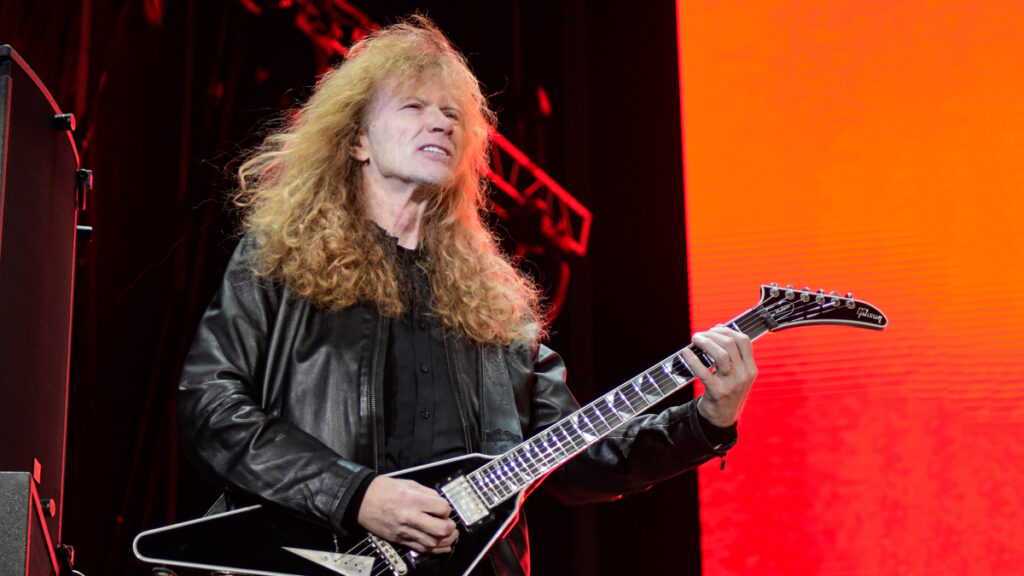
TOLUCA, MEXICO - DECEMBER 04: Dave Mustaine, leader of Megadeth band, performing as part of day 3 of the Hell & Heaven Metal Fest 2022 at Foro Pegaso on December 4, 2022 in Toluca, Mexico. (Photo by Medios y Media/Getty Images)
Dave Mustaine Reveals Positive Early Reactions to Megadeth’s Metallica Cover, Calling It a Moment of Respect, Growth, and Musical Closure
In a moment that few metal fans would have imagined decades ago, Dave Mustaine has opened up about the overwhelmingly positive early reactions to Megadeth’s recent cover of Metallica’s classic track “Ride the Lightning.” Speaking candidly in a recent SiriusXM Front Row interview with host Jose Mangin, the Megadeth frontman shared insights into how the idea came together, why it mattered deeply to him and the band, and how fans around the world have embraced the fresh yet respectful reinterpretation of one of thrash metal’s most iconic songs.
According to Mustaine, the response so far has been nothing short of encouraging. Listeners, critics, and longtime fans alike have praised Megadeth for striking a careful balance—honoring the original spirit of Ride the Lightning while injecting it with renewed power, modern production, and the band’s unmistakable identity. The cover, he explained, was never about rivalry or comparison, but about respect, gratitude, and acknowledging shared musical roots that helped shape an entire genre.
A Late-Blooming Idea That Changed the Recording Process
Mustaine revealed that the idea to record the Metallica cover arrived late in the recording process, long after Megadeth had already established the direction of their current project. Rather than discarding the idea or shelving it for the future, the band chose to embrace the challenge—one that pushed them creatively into new territory.
“This wasn’t something we planned from the beginning,” Mustaine explained. “It came up later, and when it did, it forced us to stop and really think about how we could do this the right way.”
Covering a song as historically significant as Ride the Lightning is no small task. Released in 1984, the track is widely considered a cornerstone of thrash metal, helping to define the sound, speed, and aggression of the genre. Mustaine acknowledged that taking on such a song meant Megadeth had to approach it with humility and discipline, ensuring they honored the original while still sounding like themselves.
Modernizing a Thrash Metal Classic
One of the most notable aspects of Megadeth’s reinterpretation is how the band subtly modernized the track without stripping it of its identity. Mustaine detailed several deliberate creative choices made during recording:
Slightly increased tempo, giving the song a sharper sense of urgency
Heavier, more aggressive drum production, adding modern punch and clarity
Reworked guitar solos, designed to enhance impact while maintaining the song’s core melodic structure
Rather than attempting a note-for-note recreation, Megadeth focused on bringing Ride the Lightning into the present day. The goal, Mustaine said, was to let the song breathe with modern energy while still paying homage to its origins.
“The challenge wasn’t playing it,” he noted. “The challenge was respecting it.”
Fans have responded positively to this approach, with many praising the updated sound as both powerful and faithful. Early feedback suggests listeners appreciate hearing the song through Megadeth’s lens—familiar yet revitalized, aggressive yet controlled.
Respect Over Comparison: Mustaine on Vocals
One topic Mustaine addressed directly was the inevitable comparison between his vocals and those of Metallica frontman James Hetfield. Rather than shy away from the subject, Mustaine confronted it head-on, emphasizing that comparison was never the point.
“James and I have very different vocal styles,” Mustaine said. “And that’s something that deserves respect.”
Hetfield’s commanding, rhythmic vocal delivery has long been a defining feature of Metallica’s sound, just as Mustaine’s sharper, snarling tone has shaped Megadeth’s identity. Mustaine made it clear that attempting to imitate Hetfield would have been disrespectful—not only to the song, but to both artists.
Instead, Megadeth allowed Mustaine’s voice to naturally carry the track, reinforcing the idea that this cover was a reinterpretation, not an impersonation. Fans have largely welcomed this decision, noting that Mustaine’s vocals give the song a different emotional texture while still preserving its intensity.
A Moment of Closure and Shared History
Perhaps the most powerful aspect of Mustaine’s comments was his reflection on why this cover mattered so much on a personal level. For decades, the relationship between Megadeth and Metallica has been the subject of intense scrutiny, speculation, and mythmaking within the metal community. While history cannot be rewritten, Mustaine described the recording of Ride the Lightning as a moment of closure and reconciliation with the past.
“This was about honoring history,” he said. “About recognizing where we all came from.”
Mustaine framed the cover not as a statement of competition, but as a celebration of shared beginnings—young musicians pushing boundaries, shaping a genre, and leaving an indelible mark on heavy music. Recording the song, he explained, felt like acknowledging that history with pride rather than resentment.
Fan Reception: Excitement, Support, and Appreciation
Early reactions from fans have reinforced Mustaine’s belief that the cover achieved its intended purpose. Across social media platforms, forums, and fan communities, listeners have praised the band’s musicianship, energy, and restraint.
Many fans have highlighted:
The renewed intensity of the track
The clarity and power of modern production
The respectful tone Megadeth maintained throughout
Rather than sparking controversy, the cover has generated excitement and discussion—often centered on how refreshing it is to hear one legendary band honor another without ego or hostility. For longtime fans who grew up during the height of thrash metal’s rise, the release feels symbolic: a reminder that the genre’s pioneers are still capable of growth, reflection, and unity.
A Broader Impact on the Metal Community
The significance of Megadeth covering Ride the Lightning extends beyond the song itself. In an era where metal continues to evolve and diversify, moments like this serve as bridges between generations. Younger fans are introduced to classic material through modern reinterpretations, while older fans are reminded of the genre’s foundational moments—now seen through the lens of experience and maturity.
Industry commentators have noted that such releases help keep metal history alive, not as nostalgia, but as a living, evolving tradition. By revisiting an iconic track with care and intention, Megadeth has demonstrated how legacy acts can honor the past without being trapped by it.
Looking Ahead
While Mustaine did not confirm whether Megadeth plans to release additional covers or similar projects, he made it clear that this experience was meaningful for the band. It challenged them creatively, encouraged reflection, and reaffirmed the importance of respect within the metal community.
For now, the focus remains on the positive reception and what it represents: a rare moment where history, artistry, and humility intersect.
As feedback continues to pour in from around the world, one thing is clear—Megadeth’s take on Ride the Lightning has struck a chord, not just musically, but emotionally. It stands as a testament to the enduring power of metal, the value of honoring one’s roots, and the possibility of finding closure through music.