BREAKING: Nottingham Forest Owner Evangelos Marinakis Sues Crystal Palace Over Controversial Fan Banner
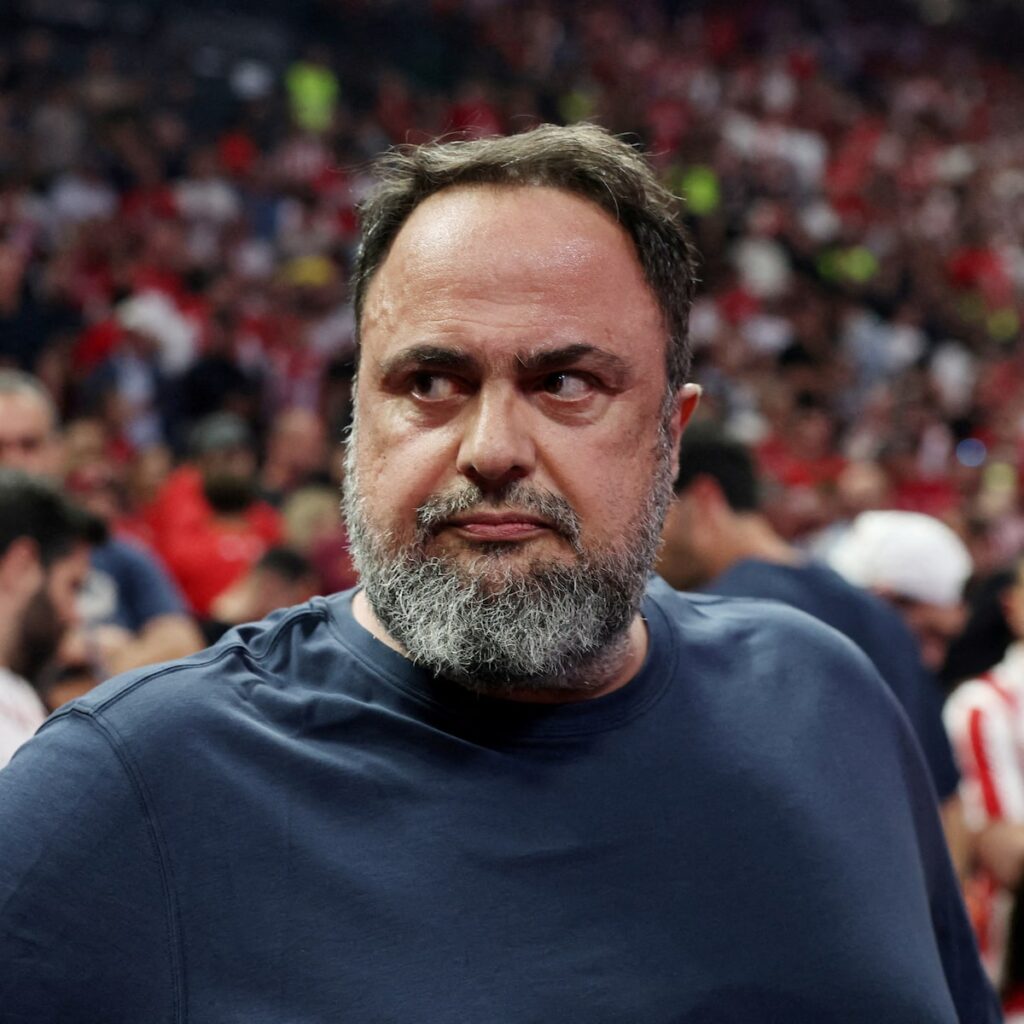
Nottingham Forest owner Evangelos Marinakis has reportedly taken legal action against Crystal Palace over a controversial banner displayed by Palace supporters during a Premier League meeting between the two clubs last season.
According to MailSport, Marinakis has filed a defamation claim at the High Court following the publication of the banner, which featured a highly provocative image portraying the Nottingham Forest owner holding a gun to the head of Forest midfielder Morgan Gibbs-White.
The banner also referenced a series of extremely serious allegations, including blackmail, match-fixing, drug trafficking and corruption. Marinakis denies the allegations referenced in the display.
The development has now transformed what was initially a controversial moment inside a football stadium into a legal dispute involving one of the most prominent figures in English football.
Crystal Palace have reportedly declined to comment on the case.
Controversial Banner Displayed During 1-1 Draw
The incident occurred during a Premier League fixture between Crystal Palace and Nottingham Forest that ended in a 1-1 draw.
While the match itself produced an even contest on the pitch, attention was also drawn to the activity in the stands, where Palace supporters displayed a banner aimed at Marinakis.
The image used on the banner was particularly striking. It depicted Marinakis in a threatening scenario involving Morgan Gibbs-White, with a gun apparently being held to the Forest player’s head.
Alongside the image were references to allegations concerning blackmail, match-fixing, drug trafficking and corruption.
The content was far more serious than the type of ordinary banter commonly associated with Premier League football. Supporters regularly criticise rival clubs, players, managers and owners through chants, banners and flags, but the display involving Marinakis contained references to serious alleged misconduct.
Marinakis has denied those allegations and has now decided to challenge the material through legal proceedings.
Marinakis Takes the Matter to the High Court
The filing of a defamation claim represents a significant escalation of the controversy.
Rather than remaining an issue of football rivalry or supporter behaviour, the dispute has now entered the legal system.
Defamation cases generally concern material that is alleged to have caused serious damage to an individual’s reputation. The circumstances surrounding the publication of the banner, its meaning and the allegations it appeared to communicate could therefore become central to the legal proceedings.
The fact that the banner was displayed publicly at a Premier League match is also significant because thousands of supporters were present, while football-related content can quickly spread through television coverage, photographs and social media.
The legal process will determine the issues raised by Marinakis’ claim. The filing of a case does not itself establish that the allegations in the banner were true or false in a legal sense, nor does it mean that Crystal Palace has already been found liable.
Those matters would need to be considered through the appropriate legal process.
Morgan Gibbs-White at the Centre of the Image
The involvement of Morgan Gibbs-White in the banner adds another notable dimension to the controversy.
Gibbs-White has become one of Nottingham Forest’s most important players since joining the club. His performances have helped establish him as a prominent figure at the City Ground, and he has also earned international recognition.
The decision to use his image in the banner therefore made the message particularly direct.
Instead of simply displaying words criticising Marinakis, the supporters used a dramatic visual representation involving one of Forest’s leading players.
The imagery appeared designed to provoke a reaction and communicate a strong message about the relationship between Marinakis and Gibbs-White.
However, because the image was connected to allegations of serious wrongdoing, the incident has now developed into something considerably more significant than a normal exchange between rival supporters.
Serious Allegations Are Denied
The most important element of the dispute concerns the allegations referenced by the banner.
The display reportedly made references to blackmail, match-fixing, drug trafficking and corruption.
These are extremely serious allegations, and Marinakis denies them.
It is important to distinguish between allegations appearing on a supporters’ banner and facts established by a court. The presence of an accusation on a banner does not make that accusation true.
Marinakis’ position is that the material was defamatory, which is why he has now brought the matter before the High Court.
The court proceedings could potentially examine what meaning was conveyed by the banner, how it was presented, who was responsible for its publication or distribution and whether the relevant legal requirements for a defamation claim have been met.
The case could therefore take some time to develop.
Crystal Palace Decline to Comment
Crystal Palace have reportedly declined to comment on Marinakis’ legal action.
The club’s decision means there has been no detailed public explanation from Palace regarding the banner or the circumstances in which it was displayed.
That may change as the legal proceedings progress, although clubs involved in active legal disputes often avoid making extensive public statements.
The absence of a comment also means that the precise position of Crystal Palace regarding the banner remains unclear from the information currently available.
There is an important distinction between a football club and its supporters. A banner displayed by supporters does not automatically mean that every element of the message represents the official position of the club.
The legal proceedings may therefore have to consider questions surrounding responsibility for the display and the relationship between the supporters involved and the club.
The Boundaries of Football Fan Expression
The case has also raised wider questions about the boundaries of supporter expression.
Football supporters have always used banners, chants, flags and other forms of visual communication to express their feelings.
At Premier League matches, it is common to see supporters mocking rival clubs, criticising players or managers and making provocative statements about controversial decisions.
Such displays form part of the culture and atmosphere of football.
However, the situation becomes more complicated when a display contains allegations of criminal or serious unethical conduct against a named individual.
The Marinakis case could therefore become an important example of the potential legal consequences surrounding supporter-generated content.
The balance between freedom of expression and protection of an individual’s reputation can be difficult, particularly in an environment as emotional and passionate as professional football.
Marinakis’ Role at Nottingham Forest
Evangelos Marinakis has been one of the most influential figures at Nottingham Forest in recent years.
Since becoming the club’s owner, he has played a significant role in Forest’s development and their return to the Premier League.
The club’s journey back to the top level of English football generated significant excitement among supporters, and Marinakis became closely associated with that period of transformation.
As an owner who has maintained a visible presence around the club, Marinakis has also become a familiar target of criticism and debate.
Football club owners often occupy a difficult position. When a team succeeds, supporters may celebrate the leadership and investment behind the scenes. When things go badly, however, owners can become the focus of frustration.
Marinakis’ passionate involvement with Nottingham Forest has made him one of the more recognisable owners in English football.
A Dispute That Goes Beyond the Football Pitch
The legal action demonstrates how events during a football match can have consequences far beyond the final whistle.
The Crystal Palace-Nottingham Forest game ended 1-1, but the result is no longer the only major talking point surrounding the fixture.
The banner has become the centre of an ongoing dispute, with Marinakis now taking the matter to court.
For supporters, this development serves as a reminder that stadium displays are not necessarily protected from legal consequences simply because they occur during a football match.
A football stadium can be an environment filled with emotion, humour, rivalry and criticism, but individuals and organisations can still pursue legal remedies when they believe their reputation has been seriously damaged.
What Could Happen Next?
With the claim reportedly filed at the High Court, attention will now turn to the next stages of the legal process.
Further details could emerge concerning Marinakis’ arguments, the evidence surrounding the banner and any response from the parties involved.
Crystal Palace have so far declined to comment, leaving many questions unanswered publicly.
The court process could eventually provide greater clarity regarding the circumstances surrounding the banner and the legal arguments being made by Marinakis.
However, it is important not to prejudge the outcome.
Filing a defamation claim is the beginning of a legal process, not proof that the claimant has already won. Similarly, the existence of a claim does not establish that the allegations contained in the banner were accurate.
The allegations remain disputed, with Marinakis denying them.
Potential Impact on Premier League Supporters
The case could attract attention from supporters across English football because banners and fan displays are such a common part of matchday culture.
If the dispute develops significantly, clubs and supporter groups may become more conscious of the potential consequences of displaying material that makes serious allegations about individuals.
It could also encourage clubs to look more closely at what supporters are permitted to bring into stadiums.
At the same time, supporters are likely to continue arguing that football should remain a place where passionate opinions can be expressed.
The challenge is finding the line between legitimate criticism, provocative football banter and statements that could potentially cause serious reputational harm.
That debate is unlikely to disappear.
Palace and Forest Rivalry Takes Another Turn
Matches between Premier League clubs can sometimes develop rivalries that extend beyond the players on the pitch.
The controversy surrounding the banner has added another layer to the relationship between Crystal Palace and Nottingham Forest.
Although the fixture itself ended without a winner, the events surrounding it have continued to generate attention.
For Forest supporters, the legal action will be closely watched because their club’s owner is directly involved.
For Palace supporters, the case could lead to discussions about the responsibilities associated with supporter displays and how far football rivalry should go.
Final Word
Evangelos Marinakis’ decision to sue Crystal Palace over the controversial banner has taken an already heated football dispute into the legal arena.
The banner, displayed during the 1-1 Premier League draw between Crystal Palace and Nottingham Forest last season, portrayed Marinakis holding a gun to Morgan Gibbs-White’s head and referenced allegations involving blackmail, match-fixing, drug trafficking and corruption.
Marinakis denies those allegations and has reportedly filed a defamation claim at the High Court.
Crystal Palace have declined to comment on the legal proceedings.
For now, the dispute remains unresolved, and the court process will determine the legal questions raised by Marinakis’ claim.
What began as a provocative supporters’ display inside a football stadium has now become a matter for the courts.
The case could ultimately have implications beyond the individuals and clubs involved, particularly regarding the limits of supporter expression and the responsibilities that come with publishing serious allegations in the highly visible environment of Premier League football.
As proceedings develop, attention will remain focused on the High Court and on whether Crystal Palace or other parties involved eventually provide a fuller response.
Until then, the central facts remain clear: a controversial banner was displayed during a 1-1 draw, Marinakis denies the allegations referenced in it, he has now launched a defamation claim, and the legal dispute is set to continue away from the football pitch.