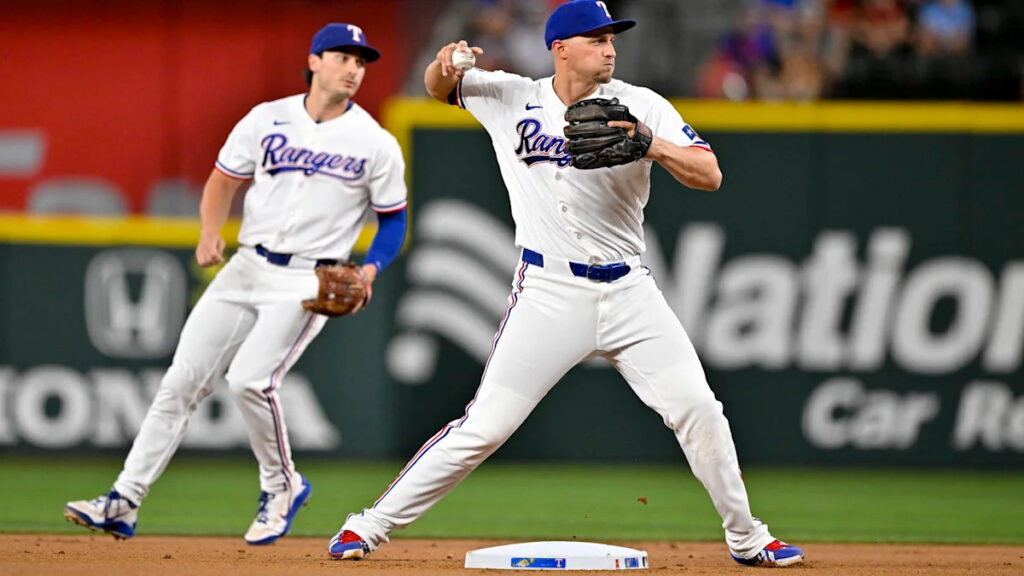
The Texas Rangers could be facing an important decision regarding their roster construction and financial commitments, but trading away two of their most valuable players simply to reduce payroll expenses may not be the smartest move for the organization. While managing finances is an essential part of running a successful baseball franchise, making significant roster changes purely for financial reasons can create problems that are difficult to solve.
The Rangers have worked hard to build a competitive team capable of challenging the strongest organizations in Major League Baseball. Their success depends not only on acquiring talented players but also on maintaining a balanced roster with experienced performers who can deliver consistently throughout a demanding season. Removing two important pieces from that structure could weaken the team’s overall quality and potentially affect its ambitions.
The discussion surrounding the possible departure of the two players described as the club’s ‘battleships’ raises an important question: should Texas prioritize immediate financial savings over maintaining the strength and stability of its roster?
Although reducing payroll commitments can provide a franchise with greater financial flexibility, it does not automatically guarantee better results on the field. Baseball organizations must carefully consider the long-term consequences of every major personnel decision, particularly when it involves players who contribute significantly to the team’s competitiveness.
Financial Savings Should Not Come at the Expense of Competitiveness
Every professional sports organization must operate within financial limits. Even wealthy franchises have to make difficult decisions about contracts, player salaries, free-agent acquisitions and future roster investments.
For the Texas Rangers, financial planning is particularly important as the organization attempts to maintain a competitive team while preparing for future seasons. However, there is a considerable difference between making sensible financial adjustments and sacrificing important players simply to reduce expenses.
Trading established players can create additional financial flexibility, but the organization must also consider what it would lose in return. A player who contributes significantly to the team’s performance cannot always be replaced by simply signing another available free agent.
Finding an equally productive replacement can be expensive, complicated and sometimes impossible. Even when the Rangers identify suitable alternatives, those players may require time to adjust to the team’s system and establish chemistry with their new teammates.
This is why trading two major contributors purely for financial reasons could become a fruitless exercise. The club might successfully reduce its payroll, but if the departures weaken its chances of winning games, the financial savings could come at a much greater sporting cost.
Why the Two ‘Battleship’ Players Matter
The description of the two players as ‘battleships’ suggests that they are regarded as major pieces of the Rangers’ roster. In baseball, established players often provide much more than their individual statistics.
They bring experience, consistency, leadership and an understanding of what it takes to compete at the highest level. Their presence can also help younger teammates develop and become more comfortable with the demands of professional baseball.
When an organization considers moving players of this importance, it must evaluate their overall contributions rather than focusing exclusively on their salaries.
A player might have a substantial contract, but that does not automatically mean the contract is a burden. If his production, leadership and availability justify the financial commitment, keeping him could be a better decision than trading him.
The same argument applies to the second player. Removing two experienced contributors from the same roster could create multiple problems at once, especially if the organization does not have equally capable replacements waiting in the wings.
Texas must therefore be careful not to underestimate the importance of roster continuity.
Trading Established Players Could Create New Problems
One of the biggest risks associated with trading important players is the possibility of creating weaknesses in areas that were previously considered strengths.
A successful baseball team requires balance. Its pitching staff, offensive production, defensive capabilities and overall depth must work together. Losing two established players could affect that balance and force the coaching staff to make adjustments that might not produce immediate results.
For example, if the Rangers move important contributors without bringing back players capable of filling those roles, the remaining roster could become less competitive.
The organization might then find itself spending additional money to address the very problems created by its earlier decisions.
This would defeat the original purpose of the trades.
Instead of achieving meaningful financial stability, Texas could end up using its savings to search for replacements, potentially creating another expensive roster-building process.
There is also the question of chemistry. Baseball teams spend considerable time developing relationships between players, coaches and management. Established teammates understand one another’s strengths, weaknesses and playing styles.
Introducing several new players can change that environment.
Although professional athletes are expected to adapt quickly, building a successful team involves more than assembling individuals with impressive statistics. The ability to work together consistently is equally important.
The Importance of Maintaining a Competitive Core
For the Rangers, maintaining a strong group of experienced players should remain an important priority.
Successful organizations generally understand that championship ambitions require a dependable core. Young prospects are valuable, and developing homegrown talent is essential, but experienced players provide a different level of reliability.
They have already demonstrated their ability to compete against quality opposition and handle the pressure associated with important games.
Trading away two established contributors could force the Rangers to depend more heavily on inexperienced players or less proven alternatives.
That approach might eventually produce positive results, but there is no guarantee that it will happen immediately.
Young players need opportunities to develop, and giving them additional responsibilities can be beneficial. However, expecting them to replace the production of established veterans without experiencing significant growing pains could be unrealistic.
The Rangers must therefore find the right balance between developing future talent and protecting the competitiveness of their current roster.
A team cannot build a sustainable future by constantly sacrificing its present.
Payroll Management Requires a Long-Term Strategy
Reducing financial commitments should not be viewed as a negative decision in every situation. There are circumstances in which trading an expensive player makes sense.
For instance, if a player’s performance has declined significantly, his contract has become difficult to justify, or the organization receives an attractive package of young talent in return, a trade could benefit both the team’s immediate and long-term plans.
However, the situation becomes more complicated when the primary motivation is simply saving money.
A responsible front office should consider several factors before agreeing to such a significant move.
These include the player’s current production, contract length, age, injury history, future value and potential trade return.
The Rangers must also examine whether the financial savings would provide enough flexibility to strengthen other areas of the roster.
If trading the two players only creates additional money without producing a clear improvement in the team’s overall situation, the decision could be difficult to defend.
Financial flexibility is useful only when an organization has a clear plan for using it.
Simply having a lower payroll does not make a baseball team stronger.
What Could the Rangers Gain From Keeping Their Important Players?
Retaining the two major contributors could provide Texas with greater stability as it prepares for future competition.
First, keeping experienced players would help preserve the team’s existing structure. The coaching staff would not need to spend valuable time rebuilding important relationships or adjusting to the departure of key personnel.
Second, their continued presence could provide younger players with opportunities to learn from experienced professionals.
Baseball is a sport in which preparation, discipline and consistency are extremely important. Having established players around the clubhouse can help create an environment where younger teammates understand the expectations required to succeed.
Third, maintaining a strong roster could improve the Rangers’ chances of competing for important honours.
Every season presents different challenges, and teams must be prepared to deal with injuries, inconsistent performances and difficult stretches of the schedule.
Having quality players available provides the coaching staff with more options when those challenges arise.
These advantages should be considered alongside the financial implications of retaining expensive contracts.
The Rangers Must Avoid Making Decisions Out of Financial Pressure
One of the most important responsibilities of a baseball front office is making decisions based on the organization’s long-term objectives rather than reacting emotionally to short-term financial concerns.
If the Rangers believe they need to reduce spending, they should explore different ways of achieving that objective before considering the departure of two major roster pieces.
They could examine other contracts, identify areas where spending can be improved and consider whether younger players can provide valuable contributions at a lower cost.
They could also explore trades involving players whose departure would have a smaller impact on the team’s overall structure.
These alternatives might allow the organization to create financial flexibility without damaging the foundation of its roster.
However, if management decides that trading either of the two players is unavoidable, the return must be worthwhile.
Texas should not accept an underwhelming trade package simply because another organization is willing to take on a significant contract.
Any potential deal must provide genuine baseball value, whether through promising prospects, established replacements or a combination of both.
What This Means for the Rangers’ Future
The Rangers’ approach to roster management could have important consequences for their future direction.
The organization must decide whether it wants to remain aggressive in pursuing immediate success or move towards a more financially conservative approach.
Neither strategy is automatically wrong. However, the timing and execution of such decisions are extremely important.
If Texas is serious about remaining competitive, it must ensure that financial adjustments do not undermine the quality of its roster.
The club’s supporters want to see an organization capable of competing consistently, not one that repeatedly sacrifices important players without a convincing replacement plan.
Fans understand that professional baseball involves difficult financial decisions. They also recognize that maintaining a competitive team requires investment.
What supporters are unlikely to appreciate is watching the organization weaken important areas of its roster simply to achieve short-term payroll savings.
The front office must therefore demonstrate that every major decision has a clear sporting and financial purpose.
Final Verdict: Saving Money Should Not Mean Sacrificing Quality
Ultimately, the suggestion that the Texas Rangers could trade their two ‘battleship’ players simply to reduce financial commitments raises serious questions about the organization’s priorities.
Financial responsibility is necessary, but it should never become an excuse for making decisions that could damage the team’s competitiveness.
The Rangers need experienced players who can contribute consistently, provide leadership and help establish the standards required to compete at the highest level.
Trading two important contributors without securing adequate replacements could leave significant weaknesses that may take considerable time and additional resources to address.
If the organization receives an exceptional offer that genuinely improves its future, then exploring a trade could be understandable. However, moving valuable players simply because their contracts are expensive would be a questionable strategy.
The real objective should be building a sustainable and competitive baseball team, not merely reducing the amount of money spent on salaries.
For Texas, the challenge is finding a balance between financial flexibility and maintaining the quality needed to compete.
At the end of the day, saving money might look like a victory on the financial statement, but if it comes at the expense of the team’s performance, it could become a costly mistake.
The Texas Rangers should think carefully before sacrificing two major pieces of their roster. Saving money is important, but weakening the team in the process could prove to be a fruitless endeavor.