Marinakis Steps Back from Controlling Stake in Nottingham Forest Ahead of Potential European Campaign
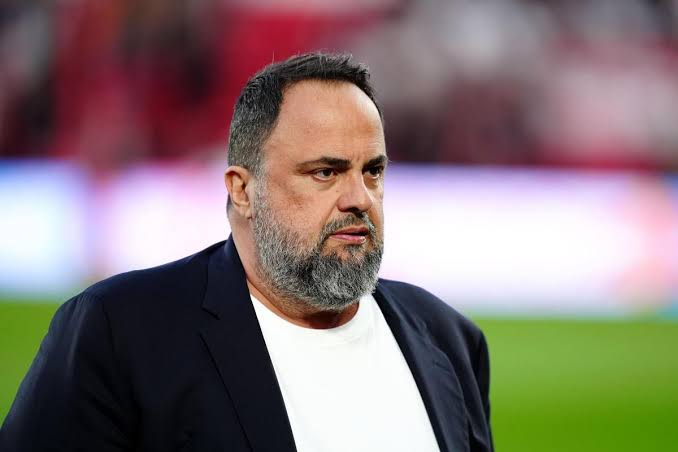
Evangelos Marinakis will no longer maintain a controlling interest in Nottingham Forest next season as the club edges closer to a possible return to European competition. The decision comes as a necessary step to comply with UEFA’s strict regulations regarding multi-club ownership, particularly in situations where two clubs under the influence of the same individual could compete in the same tournament.
Marinakis, the Greek shipping magnate and football investor, is also the owner of Olympiacos, one of Greece’s most successful football clubs. With Olympiacos already having secured qualification for next season’s UEFA Champions League, a complication arises should Nottingham Forest also qualify for European competition—especially the Champions League. UEFA rules clearly state that no single individual is permitted to exercise decisive control over two clubs participating in the same European competition, as this would represent a conflict of interest and compromise sporting integrity.
To address this issue and ensure full compliance with UEFA guidelines, Marinakis has placed his shares in Nottingham Forest into a blind trust. This arrangement effectively removes his direct control and decision-making authority over the club for the duration of the period required. A blind trust is a widely recognized legal mechanism used in football and business to temporarily separate ownership from operational influence. By transferring his shares in this manner, Marinakis ensures that Forest can compete in European competitions—should they qualify—without breaching governing body regulations.
The move is understood to be temporary rather than permanent. It does not signal a sale of the club nor a long-term exit from ownership. Instead, it represents a practical solution to a regulatory challenge that has become increasingly common in modern football, where multi-club ownership models are growing in popularity.
This type of arrangement has precedent. For example, Manchester United’s co-owners, INEOS, implemented a similar solution involving French club Nice when European qualification scenarios raised comparable regulatory concerns. Such measures are now seen as standard practice when ownership structures intersect with UEFA’s competition rules.
Forest on the Brink of a Historic Achievement
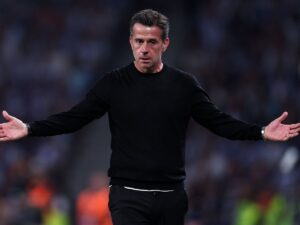
Nottingham Forest’s strong performances this season have placed them in a remarkable position. Under the leadership of head coach Nuno Espirito Santo, the club has surged into contention for Champions League qualification—an outcome few would have predicted at the start of the campaign.
Forest currently sit among the top contenders in the Premier League table. With four matches remaining, they have the opportunity to climb back into third place if they secure victory in their game in hand against Brentford at the City Ground. That fixture could prove decisive in shaping their European destiny.
The possibility of Champions League qualification represents one of the most compelling stories in the Premier League era. Only a few seasons ago, Forest were battling relegation after returning to the top flight for the first time in 23 years. Their initial campaigns back in the Premier League were dominated by survival fights, narrow escapes, and squad restructuring.
Now, however, the narrative has dramatically shifted. Rather than fighting to avoid the drop, Forest are competing with England’s elite for a place at Europe’s top table.
Nuno Espirito Santo’s Impact
Much of Forest’s transformation has been attributed to the influence of Nuno Espirito Santo. The Portuguese manager has instilled tactical discipline, defensive organization, and attacking fluidity into the squad. His leadership has elevated the club’s standards and restored belief among supporters.
Forest’s playing style has become more cohesive and confident, blending resilience with creativity. Key players have delivered consistent performances, and the team has developed a competitive edge that has enabled them to challenge traditionally stronger opponents.
Remaining fixtures against Brentford, Crystal Palace, Leicester City, West Ham United, and Chelsea will determine whether Forest can secure a Champions League berth or settle for another European competition. Regardless of the final outcome, their season already stands as a significant success.
A Return to Europe After Decades Away
If Nottingham Forest secure European qualification, it would mark their first return to continental football since the 1995–96 season. Even more significantly, Champions League qualification would bring them back to the highest level of European competition for the first time since the 1980–81 campaign.
The club’s rich European history—including back-to-back European Cup triumphs in 1979 and 1980—remains a proud chapter in English football. However, decades have passed since Forest competed among Europe’s elite. For supporters who endured years outside the top flight, the prospect of hearing the Champions League anthem at the City Ground once again carries enormous emotional weight.
Such an achievement would symbolize not only sporting progress but also strategic growth under Marinakis’ ownership. Since acquiring the club, he has invested heavily in infrastructure, player recruitment, and long-term planning. Though his controlling stake is now temporarily relinquished, his influence in shaping Forest’s upward trajectory remains evident.
Regulatory Compliance and Football’s Evolving Landscape
UEFA’s multi-club ownership regulations are designed to preserve competitive integrity. In an era where global investors frequently own stakes in multiple football clubs, conflicts of interest can arise when those clubs qualify for the same competitions.
The regulations prevent one person or entity from exerting decisive influence over two clubs competing in identical tournaments. This includes holding majority voting rights, appointing key executives, or exercising financial control that could affect sporting decisions.
Marinakis’ decision to place his shares into a blind trust demonstrates proactive governance. Rather than risking potential sanctions or exclusion from competition, Forest have acted early to ensure eligibility should qualification be confirmed.
This scenario highlights a broader shift in modern football economics. Multi-club ownership networks are increasingly common, allowing investors to share scouting systems, player development pathways, and commercial strategies across different leagues. While these structures offer strategic advantages, they also require careful navigation of governing body regulations.
Stability During Transition
Although Marinakis is stepping back from direct control, continuity within Nottingham Forest’s leadership structure will be maintained. Co-owner Sokratis Kominakis is set to return to the club’s board during this period. His involvement ensures governance stability while Marinakis’ shares remain in trust.
The temporary adjustment is not expected to disrupt day-to-day operations. Forest’s management, coaching staff, and players remain focused on securing the strongest possible finish to the season.
Supporters, meanwhile, have largely viewed the development as a technical necessity rather than a cause for concern. The overriding focus remains on the team’s performances on the pitch.
A Season to Remember
Regardless of how the final standings unfold, Nottingham Forest’s campaign will be remembered as one of the Premier League’s standout stories. From relegation battles to Champions League contention in just a few years, the transformation has been dramatic.
The club’s journey reflects resilience, strategic investment, and effective leadership. Marinakis’ temporary step back does not diminish his role in laying the foundations for this progress.
Should Forest complete the job and qualify for Europe’s premier competition, it would cap a season that already defies expectations. It would also reinforce the notion that in modern football, ambition combined with careful planning can rapidly alter a club’s fortunes.
As the final fixtures approach, anticipation continues to build around the City Ground. European nights may soon return to Nottingham—a development that seemed distant not long ago.
For now, compliance with UEFA regulations ensures that if that dream becomes reality, there will be no administrative barriers standing in Forest’s way.