The Titans of 80s Metal: How Metallica and Judas Priest Shaped a Generation
The 1980s was a transformative decade for music, and few genres captured the raw energy, rebellion, and intensity of youth like heavy metal. Within this landscape, two bands rose to define what metal meant — not just for the decade, but for generations to come. Metallica and Judas Priest, though distinct in style, were both monumental forces whose influence still resonates in modern music.
Metallica: The Raw Energy of Thrash ⚡
When Metallica emerged from the underground scene in the early 1980s, they brought with them a storm of sound that few had experienced before. Their music was fast, aggressive, and uncompromising — a sonic reflection of the restless youth of the era. Songs like “Seek & Destroy”, “Master of Puppets”, and “Ride the Lightning” were more than just music; they were anthems of rebellion, frustration, and the desire for freedom.
Metallica’s thrash metal style was defined by lightning-fast riffs, pounding rhythms, and lyrics that spoke to personal and societal struggles. They didn’t shy away from anger or chaos — instead, they channeled it into a sound that was dangerous, thrilling, and electrifying. Every chord struck and every drumbeat hammered with a sense of urgency that captured the intensity of life in the 80s.
But it wasn’t just speed that set Metallica apart. Their music carried a sense of precision and intelligence. Complex song structures, intricate solos, and thematic depth combined with street-level rawness to create a musical revolution. They didn’t just play metal — they transformed it, pushing boundaries and redefining what the genre could be.
The impact on youth culture was immediate. Metallica’s music resonated with those who felt alienated, frustrated, or simply hungry for something more than the mainstream. Their shows were electric, full of energy, and almost chaotic — a perfect mirror for the rebellious spirit that defined their fans. In many ways, Metallica became the voice of a generation that craved intensity, honesty, and power in their music.
Judas Priest: The Architects of Heavy Metal Aesthetic 🔥
While Metallica represented raw energy and thrash aggression, Judas Priest perfected the image and sound of classic heavy metal. By the 1980s, Priest had already established themselves as pioneers, but the decade saw them define the archetype of what metal looked and sounded like.
Judas Priest’s signature sound was built on twin-guitar harmonies, powerful riffs, and soaring, commanding vocals. Songs like “Breaking the Law”, “Living After Midnight”, and “Painkiller” exemplified their mastery of structure and melody, blending aggression with polish in a way that few bands could. Rob Halford’s iconic high-pitched vocals paired with Glenn Tipton and K.K. Downing’s razor-sharp guitar work forged music that felt like a weapon — precise, lethal, and unforgettable.
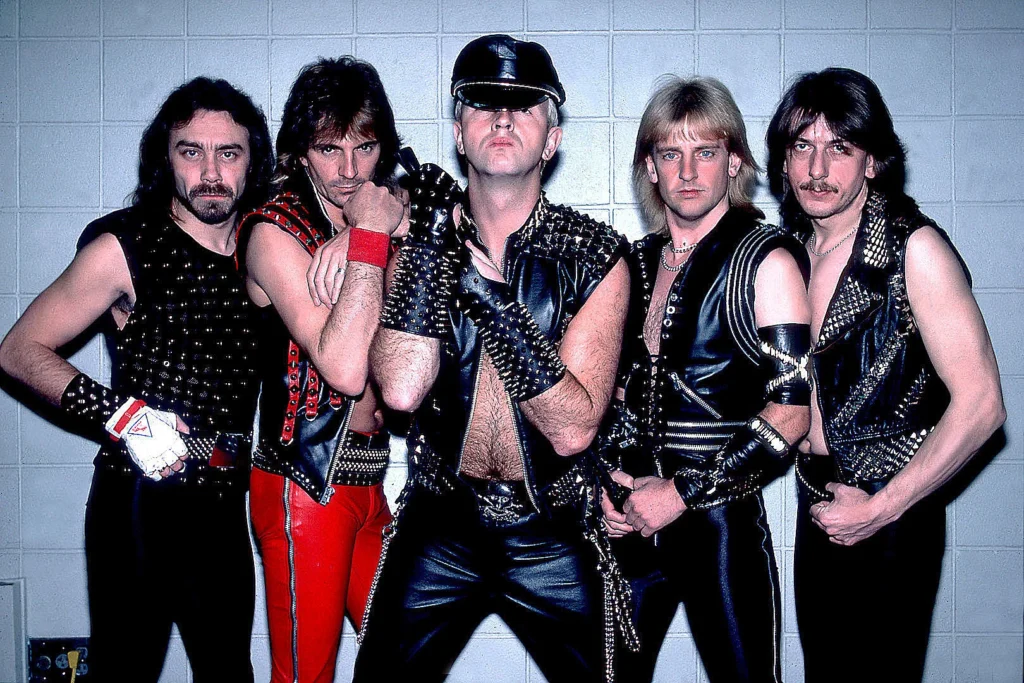
Beyond the music, Judas Priest defined the heavy metal image: leather, studs, and a commanding presence that screamed rebellion and confidence. They didn’t just play heavy metal; they embodied it. Fans didn’t just listen to their songs — they dressed like them, adopted their attitude, and carried their energy into the world. Priest made metal aspirational, giving fans not just music to hear but a lifestyle to emulate.
The Contrast That Defined an Era 👑⚡
While Metallica and Judas Priest were both monumental in the 80s, their approaches highlighted the diversity within metal. Metallica brought chaos, rebellion, and raw emotion — the pulse of the streets and the angst of youth. Judas Priest, on the other hand, brought discipline, style, and a polished sense of authority — a metal blueprint that others would follow for decades.
Yet, despite their differences, both bands shared a commitment to intensity, power, and authenticity. Both created music that demanded attention, that provoked emotion, and that inspired devotion. Metallica’s thrash spoke to the restless energy of youth, while Priest’s steel-forged sound and commanding presence gave metal a defined identity. Together, they captured the full spectrum of heavy metal in the 1980s.
Legacy and Influence
The influence of Metallica and Judas Priest extends far beyond the 1980s. Modern metal, hard rock, and even mainstream music still carry echoes of their work. Metallica’s aggressive riffs and thematic depth inspired countless thrash and metalcore bands, while Judas Priest’s twin-guitar harmonies and iconic image set a template for heavy metal aesthetics worldwide.
Even today, fans flock to their concerts with the same energy and devotion that defined the 80s. The bands’ music remains a testament to the power of heavy metal: a genre capable of expressing anger, rebellion, passion, and artistry all at once. New generations continue to discover their work, ensuring that the legacy of raw speed, aggression, and polished steel will never fade.
Conclusion
The story of 1980s heavy metal cannot be told without highlighting the monumental contributions of Metallica and Judas Priest. One brought the raw, street-level thrash that mirrored the chaos of youth; the other forged the sound and image of heavy metal into a commanding force. Together, they not only defined a decade but shaped the future of music itself.
Metallica and Judas Priest proved that metal wasn’t just noise — it was power, rebellion, and identity. Their riffs still echo in arenas and headphones around the world, reminding us that in the hands of the right artists, music can be dangerous, thrilling, and unforgettable.