A New Look, A New Attitude, and a Sound That Changed Everything: How Metallic Created Their Most Controversial — and Best-Selling — Single
In the early 1990s, few bands on Earth were as powerful, as respected, or as feared as Metallica. They were the standard-bearers of thrash metal—fast, aggressive, uncompromising. Their music was complex, their image raw, and their reputation ironclad. For years, Metallica had built a legacy on refusing to bend, refusing to soften, and refusing to chase the mainstream.
Then everything changed.
With a new look, a new attitude, and a dizzying range of unexpected musical influences, Metallica released a song that would divide their fanbase, redefine their sound, and ultimately become the best-selling single of their career. It was bold. It was controversial. And it altered the course of heavy metal forever.
That song was “Enter Sandman.”
📷 Niels van Iperen/Getty Images
Standing at a Crossroads
By the end of the 1980s, Metallica had already achieved something few bands ever do: unquestioned credibility and massive success without compromising their identity. Albums like Ride the Lightning, Master of Puppets, and …And Justice for All were not just critically acclaimed—they were foundational texts of metal.
But success came at a cost.
The band was exhausted. Endless touring, internal tensions, and the lingering weight of past tragedies had taken their toll. More importantly, Metallica found themselves asking a dangerous question for any band at the top of its game:
What comes next?
Repeating the same formula felt safe—but creatively stagnant. Pushing further into complexity risked alienating listeners. And chasing simplicity felt, to some, like betrayal.
What Metallica chose instead was reinvention.
A Radical Shift in Sound
When Metallica entered the studio in 1990 to work on what would become Metallica—commonly known as The Black Album—they made a decision that shocked fans and critics alike: they would strip things down.
Gone were the labyrinthine song structures and relentless tempo changes. In their place came groove, space, and restraint. The riffs were slower but heavier. The arrangements were tighter. The songs were designed to hit hard and linger long.
At the center of this transformation stood “Enter Sandman.”
Built around a hypnotic, instantly recognizable riff, the song was unlike anything Metallica had released before. It was menacing but accessible, dark yet oddly inviting. It didn’t rush—it stalked.
For longtime fans, it felt unfamiliar. For new listeners, it was irresistible.
New Influences, New Identity
The band’s musical influences had expanded dramatically. Rather than drawing exclusively from the speed and aggression of thrash, Metallica embraced elements of classic hard rock, blues, and even pop-level hook writing—without losing their edge.
James Hetfield’s vocals underwent a transformation as well. Instead of shouting to be heard over the chaos, he sang with control, confidence, and authority. His voice carried melody without sacrificing menace.
Lyrically, “Enter Sandman” was unsettling in a different way. Rather than political outrage or existential dread, it explored childhood fear—the nightmares lurking beneath innocence. The bedtime prayer twisted into something sinister became one of the most haunting lyrical devices in mainstream rock.
It was simple. It was effective. And it was unforgettable.
The Look That Shocked the Faithful
The music wasn’t the only thing that changed.
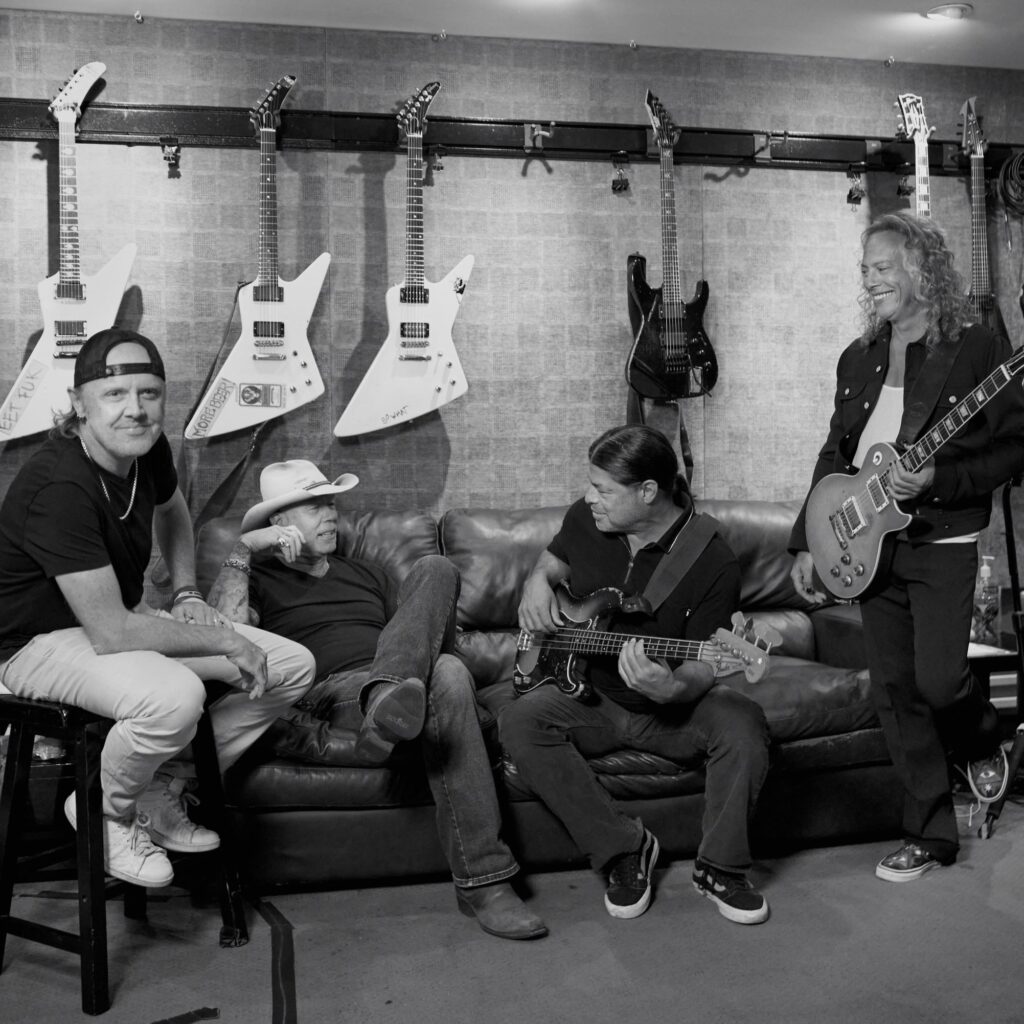
Metallica’s image evolved alongside their sound. The denim-and-leather thrash uniform gave way to black clothing, cleaner lines, and a more deliberate presentation. Haircuts grew shorter. The band looked less like underground rebels and more like global rock icons.
To some fans, this shift felt like a betrayal of metal’s unspoken code. Accusations of “selling out” surfaced almost immediately. The idea that Metallica—once the embodiment of resistance—had embraced accessibility was hard for many to accept.
But the band remained unapologetic.
They weren’t abandoning metal, they argued. They were expanding it.
Controversy Meets Commercial Explosion
When “Enter Sandman” was released, the reaction was immediate—and polarized.
Hardcore fans debated its legitimacy. Radio stations embraced it instantly. MTV placed the video in heavy rotation. Concert crowds—regardless of age, background, or musical allegiance—responded with overwhelming energy.
The numbers told a story no argument could silence.
“Enter Sandman” became Metallica’s best-selling single, catapulting the band into a level of global recognition few metal acts had ever achieved. The Black Album would go on to sell tens of millions of copies worldwide, becoming one of the most successful albums in music history.
Suddenly, Metallica wasn’t just a metal band. They were a cultural force.
A Song That Refused to Age
What makes “Enter Sandman” remarkable isn’t just its commercial success—it’s its longevity.
Decades later, the song remains a staple of sports arenas, film soundtracks, radio playlists, and live performances. Its opening riff is instantly recognizable to audiences who may not even consider themselves metal fans.
At concerts, the response is still explosive. The moment that riff begins, tens of thousands of voices rise in unison. The controversy fades. The connection remains.
The song didn’t just survive the backlash—it outlived it.
Rewriting the Rules of Heavy Metal
“Enter Sandman” changed the rules of what heavy metal could be.
It proved that heaviness wasn’t defined solely by speed or complexity. That darkness could coexist with accessibility. That a band could evolve without losing its soul—though not without losing some fans along the way.
In doing so, Metallica opened doors for countless artists who followed. Bands learned that mainstream success and artistic identity were not mutually exclusive, even if the balance was difficult to maintain.
The ripple effect of that single can still be felt across rock and metal today.
The Band’s Own Reflection
Over the years, Metallica have acknowledged the controversy surrounding “Enter Sandman,” but they have never disowned it. Instead, they’ve framed it as a necessary moment of growth—one that allowed them to survive, evolve, and continue creating.
They understood the risk. They accepted the consequences. And they stood by the result.
The song wasn’t designed to please everyone. It was designed to reflect where the band was at that moment in time.
And that honesty—however divisive—resonated.
Legacy Beyond the Debate
Today, debates about whether “Enter Sandman” was Metallica’s “sell-out moment” feel increasingly outdated. History has provided clarity that emotion once obscured.
The song didn’t weaken Metallica’s legacy—it expanded it.
It brought metal into living rooms that had never welcomed it before. It introduced a new generation to a band that would lead them backward into heavier, faster, more complex music. And it ensured that Metallica would not be frozen in time, trapped by expectations.
Instead, they became something rarer: a band that could change and endure.
A Single That Changed Everything
With one song, Metallica reshaped their identity, challenged their audience, and rewrote the trajectory of heavy music in the mainstream.
It was controversial. It was unexpected. It was unstoppable.
And decades later, “Enter Sandman” remains what it always was—a reminder that evolution, however uncomfortable, is often the price of survival.