Blind Faith’s “Can’t Find My Way Home”: The Quiet Masterpiece That Still Speaks to the Lost
More than five decades after its release, “Can’t Find My Way Home” by Blind Faith continues to resonate as one of the most emotionally powerful and quietly profound songs in rock history. In an era defined by loud anthems, extended guitar solos, and cultural upheaval, this fragile, understated track emerged as something entirely different—a gentle confession wrapped in melody, a soft-spoken truth that has endured far beyond the brief lifespan of the band that created it.
Blind Faith may have existed only fleetingly, but with this single song, they etched an eternal mark into the emotional landscape of music. “Can’t Find My Way Home” is not just a track—it is a refuge. A place listeners return to in moments of confusion, grief, loneliness, or reflection, when words feel heavy and answers feel distant.
A Song Born from Uncertainty
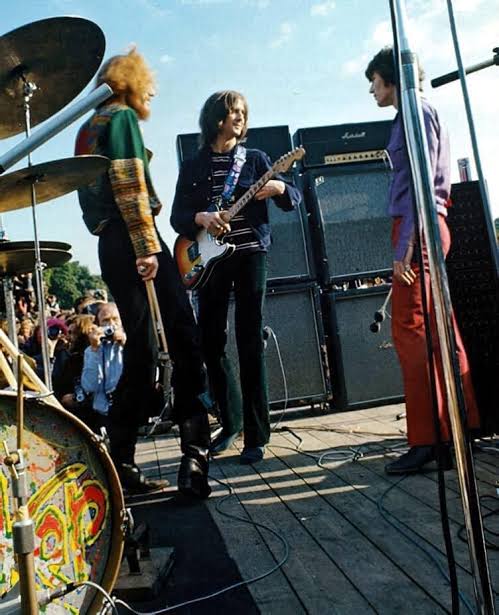
Blind Faith itself was a band formed under extraordinary circumstances. A supergroup composed of Eric Clapton, Steve Winwood, Ginger Baker, and Ric Grech, the project carried immense expectations from the moment it was announced in 1969. The music world anticipated thunderous blues rock and virtuosic excess. Instead, one of Blind Faith’s most enduring moments came not through force or spectacle, but through restraint.
Written and sung by Steve Winwood, “Can’t Find My Way Home” feels deeply personal, almost private—like a thought spoken aloud when no one else is listening. From the opening acoustic guitar, the song establishes an intimate space, inviting the listener not to observe, but to feel.
There is no dramatic buildup, no explosive climax. The power of the song lies in its honesty and simplicity. Each note feels intentional. Each lyric carries weight without demanding attention.
Gentle, Yet Devastatingly Powerful
What makes “Can’t Find My Way Home” so extraordinary is its emotional balance. It is undeniably sad, yet never hopeless. Melancholic, yet comforting. It does not scream despair—it whispers understanding.
The lyrics speak of displacement, confusion, and emotional exhaustion:
> “I’m wasted and I can’t find my way home.”
In just a single line, Winwood captures a universal feeling—being physically present in the world while emotionally untethered from it. The word wasted can be interpreted in countless ways: intoxication, fatigue, emotional depletion, or simply being worn down by life itself. That openness is precisely why the song continues to connect across generations.
Listeners bring their own experiences to the song. Loss. Heartbreak. Addiction. Existential doubt. Moments when life feels directionless. The song does not define the pain—it allows space for it.
A Hymn for the Lost
Over time, “Can’t Find My Way Home” has taken on the role of a modern hymn—not religious in nature, but spiritual in effect. It offers no sermon, no resolution. Instead, it offers companionship.
In moments of grief, people don’t always need solutions. Sometimes, they just need to know that someone else has stood in the same emotional fog. Blind Faith understood this instinctively. In under four minutes, they created a piece of music that sits beside the listener, rather than standing above them.
That is why the song is so often described as comforting. It doesn’t minimize pain. It validates it.
Minimalism as a Statement
Musically, the track is a masterclass in restraint. Acoustic guitar lines drift softly, supported by subtle percussion and understated accompaniment. There is no attempt to dominate the listener. Instead, the music breathes.
Winwood’s vocal performance is particularly striking—not because of vocal acrobatics, but because of its vulnerability. His voice carries a quiet weariness that feels lived-in and authentic. There is no bravado, no posturing. Just honesty.
In an industry that often rewards excess, “Can’t Find My Way Home” proved that minimalism could be just as powerful—if not more so.
Timeless Relevance Across Generations
What’s remarkable about the song is how it continues to find new audiences decades after its release. Younger listeners, discovering it through streaming platforms, film soundtracks, or word of mouth, often describe the same reaction older fans had in the late 1960s: this song understands me.
In a modern world filled with constant noise, social pressure, and emotional overload, the song feels more relevant than ever. Its quiet pace feels like resistance to chaos. Its honesty feels like relief.
It’s not uncommon to hear people say they turn to this song late at night, during long drives, or in moments of emotional reckoning. It has become a soundtrack for introspection.
More Than Nostalgia
While “Can’t Find My Way Home” is often associated with the late 1960s counterculture, its power extends far beyond nostalgia. This is not a song trapped in its era. Its themes are timeless because human confusion, loss, and longing are timeless.
Blind Faith may have disbanded shortly after releasing their only album, but this song ensured that their brief existence would never be forgotten. It stands as proof that longevity is not measured by how long a band lasts, but by how deeply their music embeds itself in the human experience.
Cultural and Emotional Legacy
Over the years, the song has been covered by numerous artists, featured in films and television series, and referenced in conversations about the most emotionally resonant tracks ever written. Yet no version quite matches the quiet magic of the original recording.
Critics and fans alike often describe it as one of the most emotionally honest songs in rock history—not because it tells a dramatic story, but because it tells a true one.
It speaks to moments when identity feels fragile. When direction feels lost. When all you can say is that you’re trying to find your way back—to yourself, to peace, to something that feels like home.
Why It Still Matters
In a world obsessed with confidence, certainty, and success, “Can’t Find My Way Home” dares to sit in uncertainty. It acknowledges that not knowing is part of being human.
That may be its greatest gift.
The song doesn’t rush healing. It doesn’t demand clarity. It simply says: I’ve been here too.
And sometimes, that is enough.
A Quiet Masterpiece That Endures
Blind Faith’s “Can’t Find My Way Home” stands as a reminder that the most powerful art doesn’t always arrive loudly. Sometimes it arrives softly, sits beside you, and stays long after the sound fades.
It is gentle, but it is strong. Simple, yet endlessly deep. Sad, yet beautiful.
And decades later, it still does what it has always done best—offering comfort to those who feel lost, and reminding them that they are not alone.
Because sometimes, the most meaningful thing a song can say is not where to go—but simply: